

How to Measure Chain Size Correctly for Round Link Chains?
Wrong chain size can cause equipment failure, unsafe lifting, and costly downtime. Many buyers struggle to measure chain size correctly before ordering replacement chains.
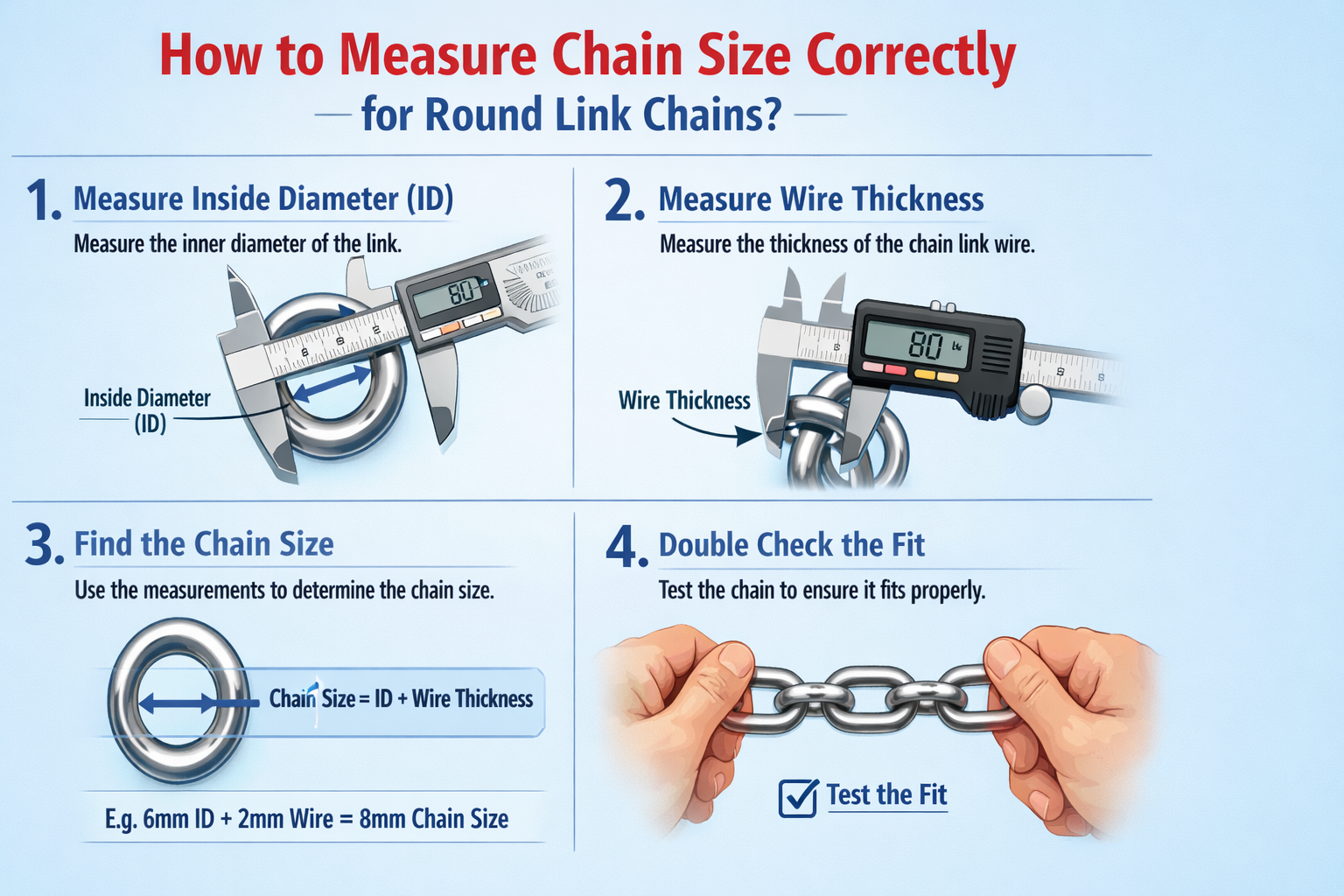
To measure round link chain size, record three key dimensions: wire diameter, inside length (pitch), and inside width. Use a caliper for accurate measurement, check multiple links, and compare the results with a standard chain size chart to determine the correct chain specification.
Learn how to measure chain size for round link chains. Follow this guide to measure chain diameter, pitch, and width accurately using a chain size chart for industrial chains.
What Are the Key Dimensions Used to Measure Chain Size?
Before measuring a round link chain, it is important to understand which dimensions determine the actual chain size. Industrial chains follow standardized measurements that allow buyers to identify specifications accurately.
The three main measurements used to determine chain size are wire diameter, pitch (inside length), and inside width. These dimensions define the chain’s strength, compatibility with hooks, and overall performance in lifting, mining, anchoring, or lashing applications.
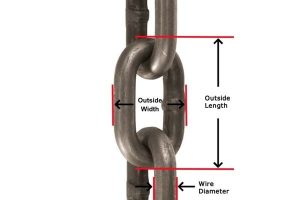
Wire diameter refers to the thickness of the steel rod used to form each chain link. Pitch (inside length) measures the internal distance between two parallel sides of a link. Inside width measures the space between the inner sides of the link. Together, these values define the chain size standard used in round link chains such as lifting chains, mining chains, anchor chains, and lashing chains.
Correct chain identification starts with measuring diameter, pitch, and inside width.
How to Measure Chain Diameter Accurately?
The wire diameter is the most important measurement because it directly relates to the strength and load capacity of a round link chain.
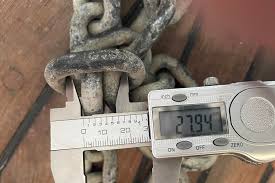
Use a digital or vernier caliper to measure the diameter of the steel rod forming the chain link. Measure several different links and calculate the average to reduce errors caused by wear or deformation.
When measuring chain diameter, place the caliper on the round surface of the steel link rather than on worn or flattened areas. For used chains, take measurements from at least three to five links. Industrial chains such as G80 or G100 lifting chains must meet strict dimensional tolerances, so accurate diameter measurement is essential for safety and compatibility with lifting components.
Always use a caliper and measure multiple links for accuracy.
How Do You Measure Chain Pitch (Link Length)?
Pitch measurement helps identify the chain specification and ensures compatibility with equipment such as sprockets, lifting hooks, or connectors.
Chain pitch is the internal length of the link measured from one inner side to the opposite inner side. Measuring several consecutive links and dividing the result improves accuracy.
For precise measurement, measure the total length of five or ten chain links and divide by the number of links. This method reduces measurement errors caused by manufacturing tolerances or wear. Pitch measurement is particularly important when replacing industrial chains used in lifting equipment, mining machinery, or marine anchoring systems.
Measure multiple links and average the result for reliable pitch measurement.
How to Measure Chain Inside Width?
Inside width determines whether a chain can properly fit hooks, shackles, connectors, and lifting accessories used in industrial applications.
Use a caliper to measure the distance between the two inner sides of the chain link. Ensure the caliper tips touch the inner surfaces without including the curved edges.
Different industries require specific inside widths to ensure compatibility with lifting hardware or mechanical systems. If the inside width is incorrect, the chain may not fit hooks or connectors safely. For lifting chains and lashing chains, maintaining correct inside width ensures stable load distribution and prevents unexpected failure during operation.
Inside width ensures the chain fits correctly with lifting hardware.
How to Identify Chain Size Using a Chain Size Chart?
After measuring the key dimensions, the next step is comparing the values with a standard chain size chart to determine the exact chain specification.
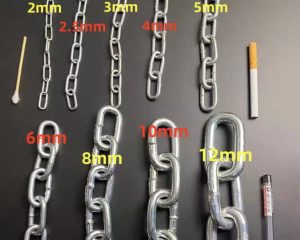
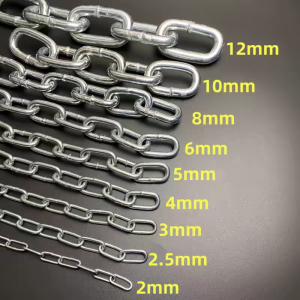
A chain size chart helps match diameter, pitch, and inside width with standard round link chain sizes. This makes it easier to identify replacement chains for industrial equipment.
Below is a simplified round link chain size chart commonly used in industrial applications:
| Chain Size | Wire Diameter (mm) | Pitch (mm) | Inside Width (mm) |
|---|---|---|---|
| 6 mm | 6 | 18 | 7.5 |
| 8 mm | 8 | 24 | 10 |
| 10 mm | 10 | 30 | 12 |
| 13 mm | 13 | 39 | 16 |
| 16 mm | 16 | 48 | 20 |
By comparing your measured values with this chart, buyers can quickly determine the correct round link chain size before ordering.
Use measurement results to match the correct specification in the chain size chart.
What Tools Are Needed to Measure Industrial Chains?
Using the right tools ensures precise measurement and helps procurement managers avoid ordering the wrong chain specification.
Common tools for measuring chain size include digital calipers, vernier calipers, steel rulers, and professional chain gauges designed for industrial inspection.
Digital calipers provide the highest accuracy and are recommended for measuring wire diameter and inside width. Steel rulers can help measure overall chain length when calculating pitch. For professional inspections, chain gauges are often used in heavy industries such as lifting, mining, and marine applications to quickly verify chain wear and dimensional compliance.
Accurate tools improve measurement precision and purchasing decisions.
Why Choose a Professional Round Link Chain Manufacturer?
Even when measurements are correct, choosing a reliable chain manufacturer is equally important for safety, durability, and consistent supply.
A professional manufacturer ensures strict material selection, precise dimensional control, and certified testing to guarantee chain performance in demanding industrial environments.
With over 20 years of manufacturing experience, Elephant specializes in high-strength round link chains including lifting chains, mining chains, anchor chains, and lashing chains. Using high-strength alloy steel and advanced heat treatment processes, Elephant chains deliver excellent load capacity, wear resistance, and corrosion resistance for global industrial customers.
Professional manufacturing ensures reliable, safe, and durable chain performance.
Conclusion
Measuring the correct chain size is essential for ensuring safety, equipment compatibility, and efficient industrial operations. By accurately measuring the wire diameter, pitch, and inside width of a round link chain, buyers can quickly identify the correct chain specification using a standard chain size chart.