
What Are the Different Grades of Chain? A Complete Guide
Choosing the wrong chain can cause safety risks and costly failures. Understanding chain grades helps you select the right chain for lifting, transport, and industrial applications.
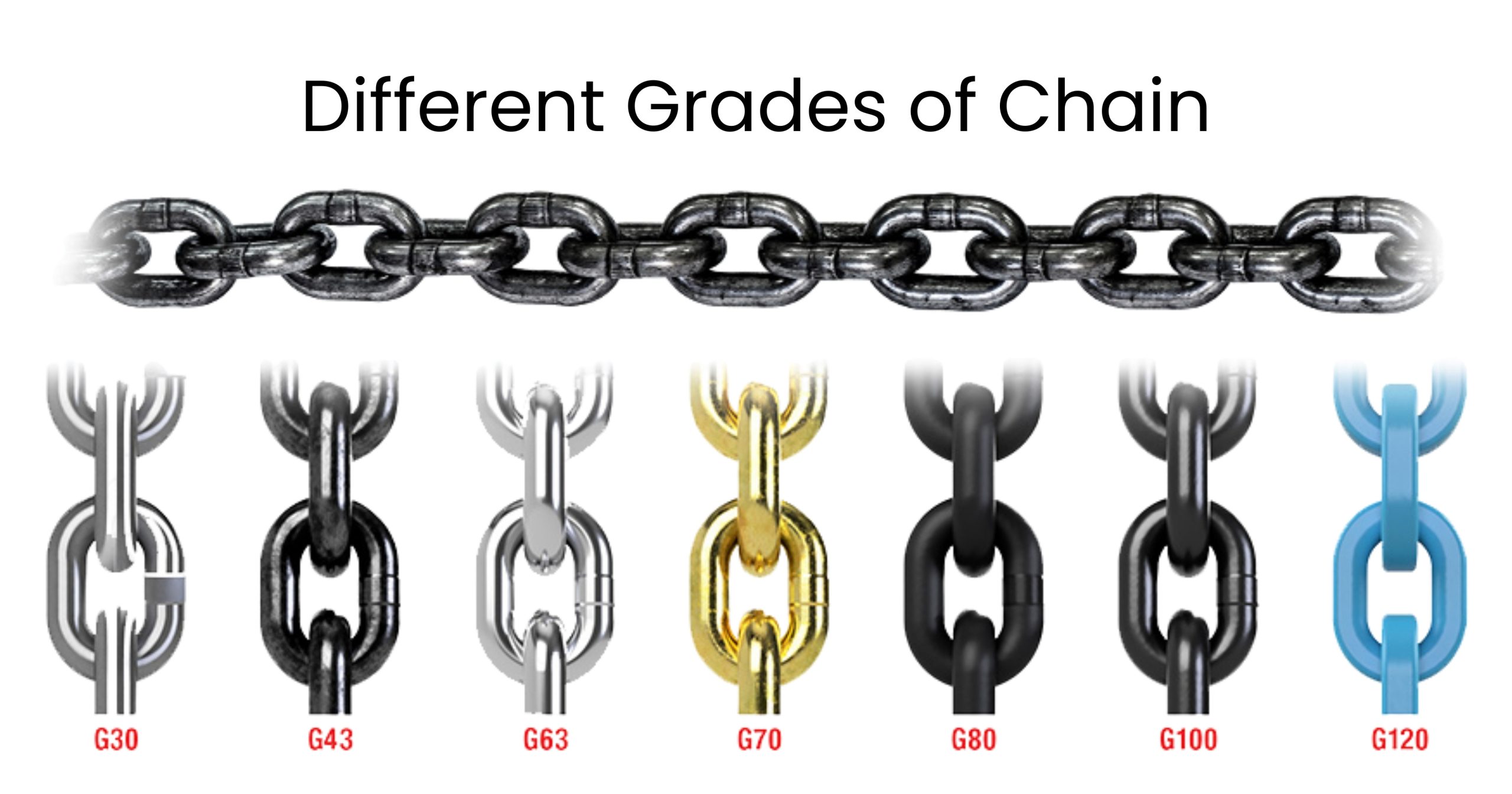
Chain grades indicate the strength and load capacity of a chain. Common grades include G30, G43, G70, G80, and G100. Among them, Grade 80 and Grade 100 alloy steel chains are widely used for lifting because of their high strength, heat treatment, and certified safety standards.
Let’s explore grades of chain in detail.
What Do Chain Grades Mean?
When purchasing industrial chains, buyers often see numbers such as G30, G70, or G80. These numbers represent the chain grade, which indicates the strength and manufacturing standards of the chain.
Chain grade refers to the strength level and material quality of a chain, determined by its tensile strength, alloy composition, and heat treatment process. Higher grades generally provide greater load capacity and improved durability.
Chain grades are defined by industry standards and testing results. Manufacturers determine the grade based on factors such as tensile strength, material composition, and heat treatment processes. For example, alloy steel chains used in lifting applications must meet strict strength requirements. Higher-grade chains are designed to handle heavier loads and demanding industrial environments.
Chain grades represent chain strength levels.
What Are the Most Common Grades of Chain?
Industrial chains are produced in several grades, and each grade is designed for a specific purpose depending on load requirements and working conditions.
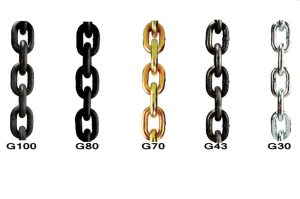
The most common chain grades include G30, G43, G70, G80, and G100, each offering different strength levels and applications in industries such as transportation, construction, and lifting equipment.
For example, Grade 30 chains are typically used for light-duty applications like agriculture or general utility. Grade 43 chains provide slightly higher strength for towing or logging. Grade 70 chains, often called transport chains, are widely used for cargo securement. In contrast, Grade 80 and Grade 100 chains are high strength lifting chains, specifically designed for overhead lifting and rigging systems.
Each grade serves a different purpose.
Chain Grade Chart
A chain grade chart helps buyers quickly compare chain strength levels and typical applications. In most industrial environments, Grade 80 and Grade 100 alloy steel chains are the preferred choices for lifting operations, while lower grades are mainly used for transport or general utility.
| Chain Grade | Material Type | Strength Level | Typical Applications | Lifting Approved |
|---|---|---|---|---|
| Grade 30 (G30) | Carbon Steel | Low Strength | Agriculture, general utility, light-duty binding | No |
| Grade 43 (G43) | Carbon Steel | Medium Strength | Towing, logging, general industrial use | No |
| Grade 70 (G70) | Heat-Treated Carbon Steel | High Strength | Cargo securement, transport chains, trucking | No |
| Grade 80 (G80) | Alloy Steel | Very High Strength | Lifting chains, rigging, overhead lifting | Yes |
| Grade 100 (G100) | Alloy Steel | Ultra High Strength | Heavy lifting, industrial rigging, offshore lifting | Yes |
Which Chain Grades Are Safe for Lifting?
In lifting operations, safety is critical. Not every chain is designed to handle the loads and stresses involved in overhead lifting.
Only Grade 80 and Grade 100 chains are commonly approved for lifting applications. These chains are manufactured from high-quality alloy steel and undergo strict heat treatment to achieve high strength and durability.
A G80 lifting chain or G100 lifting chain must meet strict safety standards. These chains are tested for working load limits, breaking strength, and elongation. Lifting operations involve dynamic loads and safety factors, so certified lifting chains are essential. Reliable manufacturers also provide traceability, inspection records, and certification documents.
Certified lifting chains ensure safe operations.

What Is the Difference Between G80 and G100 Chain?
Many buyers compare Grade 80 and Grade 100 chains when selecting lifting equipment. Both are designed for lifting, but they offer different strength levels.
Grade 100 chain is about 25% stronger than Grade 80 chain, allowing it to handle heavier loads while maintaining the same chain size.
Because of its higher strength, G100 lifting chain allows lifting systems to use lighter or smaller components while maintaining the required load capacity. This improves efficiency in industries such as construction, heavy equipment handling, and offshore lifting. However, both G80 and G100 alloy steel chains must undergo strict heat treatment and quality testing.
G100 chains offer higher lifting performance.
How Is Chain Grade Tested?
Before chains are used in industrial environments, they must undergo strict testing procedures to confirm their performance and reliability.
Chain grade is determined through tensile strength testing, proof load testing, and material inspection, ensuring the chain meets the required strength classification.
Professional manufacturers perform multiple tests during production, including tensile strength measurement, elongation testing, and surface inspection. Lifting chains must also meet additional safety requirements to ensure they can handle heavy loads without failure. A reliable industrial chain supplier will provide inspection reports and certification for each production batch.
Testing guarantees chain strength and safety.
How to Choose the Right Chain Grade for Your Application?
Choosing the right chain grade requires understanding the working environment, load requirements, and safety standards of your application.
The correct chain grade should match the required load capacity, working conditions, and intended use, whether for lifting, cargo securement, or general industrial tasks.
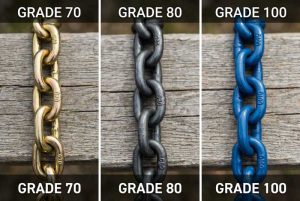
For instance, Grade 70 chains are commonly used for transportation and cargo securement, while Grade 80 and Grade 100 chains are designed for overhead lifting systems. Buyers should also consider factors such as corrosion resistance, manufacturing quality, and supplier reliability. Working with an experienced lifting chain manufacturer can help ensure consistent product quality and stable supply.
Proper chain grade selection improves safety and efficiency.
Conclusion
Chain grades are essential indicators of a chain’s strength, material quality, and application range. Common grades such as G30, G43, G70, G80, and G100 serve different purposes across industries. For lifting operations, Grade 80 and Grade 100 alloy steel chains are the most reliable choices due to their high strength and strict testing standards. Understanding chain grades helps buyers choose safer and more efficient chains for their specific applications.
About Elephant Chain
Elephant is a professional round link chain manufacturer with over 20 years of industry experience in China. We specialize in producing high-strength alloy steel chains, including G80 lifting chains, G100 lifting chains, mining chains, anchor chains, and lashing chains for demanding industrial applications.
FAQ
What grade chain is best for lifting?
For lifting applications, Grade 80 and Grade 100 chains are the most commonly used. These chains are made from high-strength alloy steel and undergo strict heat treatment and strength testing. They are specifically designed for overhead lifting and rigging systems where safety and reliability are critical.
What is the difference between G70 and G80 chain?
The main difference is their application and strength. Grade 70 chain is typically used for cargo securement in transportation, while Grade 80 chain is manufactured from alloy steel and approved for overhead lifting. Grade 80 chains provide higher strength and meet lifting safety standards.
How do you identify the grade of a chain?
Most industrial chains have grade markings stamped on the chain links. These markings indicate the chain grade, such as G70, G80, or G100. Buyers should also check product certifications and manufacturer specifications to confirm the chain’s strength and intended use.
Is Grade 100 chain stronger than Grade 80?
Yes. Grade 100 chain is approximately 25% stronger than Grade 80 chain. This means it can handle heavier loads while using the same chain diameter, making it suitable for heavy lifting and demanding industrial applications.
Can transport chains be used for lifting?
No. Transport chains such as Grade 70 chains should not be used for lifting operations. They are designed for cargo securement rather than overhead lifting. Using non-lifting chains in lifting applications can create serious safety risks.