
What Are the Different Types of Industrial Chains and How Do You Choose the Right One?
Industrial equipment often fails due to improper chain selection. This leads to downtime, safety risks, and high repair costs. Understanding the different types of industrial chains helps you avoid expensive mistakes.
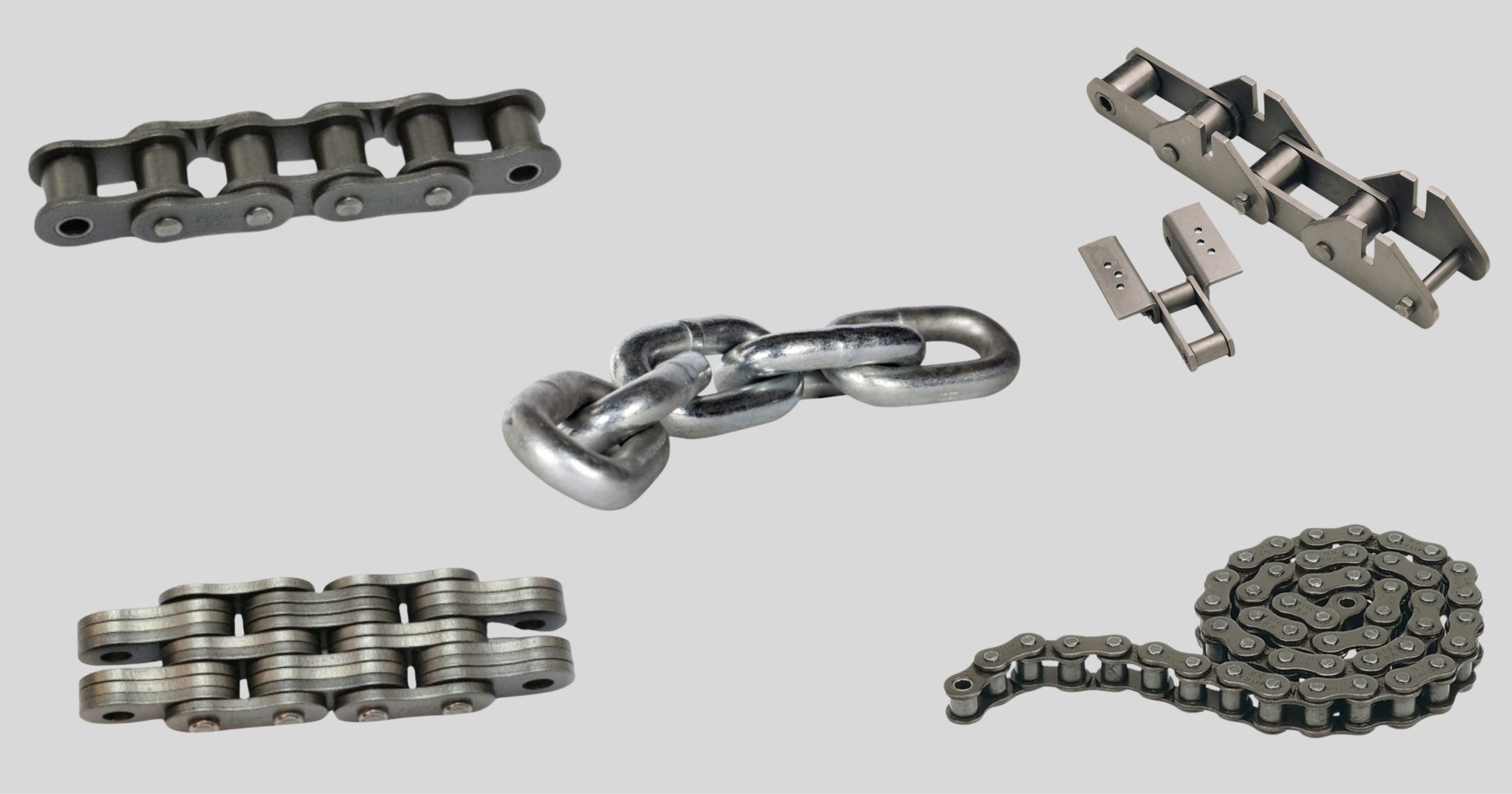
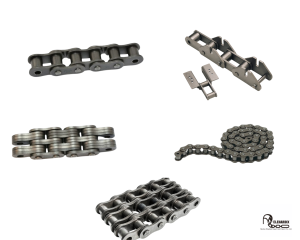
The main types of industrial chains include standard roller chains, leaf chains, engineering class chains, specialty industrial chains, and conveyor or accumulator chains. Each type is designed for specific load capacities, operating environments, and performance requirements, ensuring efficient power transmission or material handling in industrial systems.
Now, let’s explore each type in detail and understand where they are best used.
What Is an Industrial Chain?
Industrial chains are essential mechanical components used to transmit power or move materials in various industrial systems. They are designed to operate under heavy loads, continuous motion, and demanding environmental conditions.
An industrial chain is a series of interconnected metal links engineered to transfer mechanical power between shafts or transport products along production lines. They are commonly used in machinery that requires durability, precision, and strength in challenging environments.
Compared to belt drives, chains provide better synchronization and higher load capacity. They are widely used in manufacturing plants, agricultural equipment, mining operations, automotive systems, and food processing facilities. Their structure allows them to withstand high stress, temperature variations, and abrasive conditions when properly maintained and lubricated.
Industrial chains play a critical role in maintaining operational efficiency and long-term equipment reliability.
What Are the Main Types of Industrial Chains?
There are several types of industrial chains, each designed to meet specific mechanical and environmental requirements. Choosing the right type directly affects performance, durability, and safety.
The primary types of industrial chains are roller chains for power transmission, leaf chains for lifting, engineering class chains for heavy-duty industries, specialty chains for unique environments, and conveyor or accumulator chains for material handling systems.
To make it easier to compare them, here is a quick overview:
| Type of Industrial Chain | Main Function | Common Applications | Key Feature |
|---|---|---|---|
| Standard Roller Chains | Power transmission | Machinery, agriculture, equipment drives | Efficient motion transfer |
| Leaf Chains | Lifting | Forklifts, hoists | High tensile strength |
| Engineering Class Chains | Heavy-duty conveying | Mining, cement, forestry | Impact resistance |
| Round Steel Chains | Heavy lifting & mining | Scraper conveyors, hoisting, marine | High load & wear resistance |
| Specialty Industrial Chains | Special environments | Food, chemical, marine | Corrosion/heat resistant |
| Conveyor/Accumulator Chains | Material transport | Assembly lines, logistics | Smooth product handling |
Understanding these differences helps you match the chain type to your operational needs.
1. Round Steel Chains
Round steel chains are widely used in heavy-duty industrial and lifting applications due to their simple structure and exceptional strength. They are especially important in mining and hoisting systems.
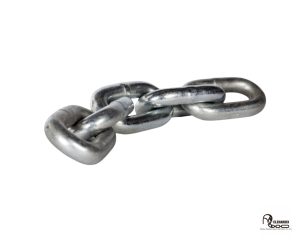
Round steel chains are made of high-strength alloy steel formed into welded round links. They are primarily used in mining conveyor systems, hoisting equipment, lifting slings, and marine applications where high tensile strength and durability are essential.
These chains are designed to withstand heavy dynamic loads, impact forces, and harsh environments. In mining operations, round link chains are commonly used in scraper conveyors and armored face conveyors. Their uniform round structure distributes stress evenly, reducing weak points. With proper heat treatment and surface finishing, they offer excellent wear resistance and long service life. They are also available in different grades to meet various load requirements.
Round steel chains are ideal for high-load, high-impact, and underground industrial environments.
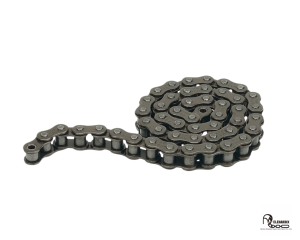
2. Standard Roller Chains
Standard roller chains are the most widely used type of industrial chain for transmitting mechanical power. They are commonly found in both light-duty and medium-duty industrial applications.
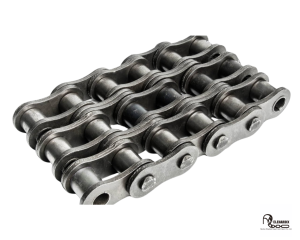
Roller chains consist of inner and outer plates, pins, bushings, and rollers that engage with sprockets to transfer motion efficiently. Their standardized dimensions make them easy to replace and widely compatible with various machines.
These chains are popular because they provide high transmission efficiency with minimal slippage. They are used in conveyors, agricultural equipment, motorcycles, printing machines, and packaging equipment. With proper lubrication and alignment, roller chains can operate for long periods with minimal maintenance. They are ideal for applications that require steady speed and moderate load capacity.
Roller chains are reliable, efficient, and versatile for everyday industrial power transmission.
3. Leaf Chains
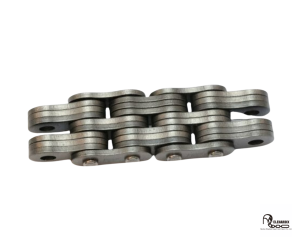
Leaf chains are specifically designed for lifting applications where high strength and compact structure are critical. They are commonly used in vertical load systems.
Leaf chains are made of stacked link plates connected by pins, without rollers. This design allows them to handle very high tensile loads, making them suitable for forklifts, hoists, and lifting platforms.
Unlike roller chains, leaf chains operate over smooth sheaves instead of sprockets. Their simple yet strong construction makes them resistant to shock loads and fatigue when properly maintained. Regular inspection is essential because lifting operations involve safety risks. These chains are frequently used in warehouses, construction sites, and hydraulic lifting equipment.
Leaf chains are best suited for heavy lifting and high-tension vertical applications.
4. Engineering Class Chains
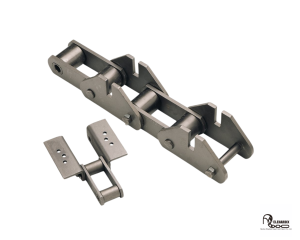
Engineering class chains are built for extreme industrial environments where heavy loads, abrasive materials, and impact forces are common. They are larger and stronger than standard roller chains.
These chains are designed to withstand high-impact conditions and are commonly used in mining, cement production, lumber processing, and bulk material handling industries.
Their robust construction allows them to operate in dusty, wet, or high-temperature environments. Engineering chains are often custom-designed to meet specific industrial requirements. They can handle shock loads and continuous heavy-duty cycles. Because they operate in harsh conditions, regular inspection and proper lubrication are essential for long service life.
Engineering class chains deliver maximum durability for the toughest industrial applications.
5. Specialty Industrial Chains
Specialty industrial chains are developed for environments that require specific materials or performance characteristics beyond standard designs. They address industry-specific challenges.
These chains may include stainless steel chains, corrosion-resistant coated chains, or high-temperature chains used in food processing, marine environments, and chemical plants.
For example, food-grade chains must comply with hygiene standards and resist contamination. Corrosion-resistant chains perform well in humid or chemical-exposed environments. Some specialty chains are designed to reduce noise or operate without lubrication. Selecting the correct specialty chain ensures regulatory compliance and reliable long-term operation.
Specialty chains solve unique operational challenges in regulated or harsh environments.
6. Conveyor and Accumulator Chains
Conveyor and accumulator chains are designed to transport products smoothly along production and assembly lines. They are essential in automated manufacturing systems.
These chains move materials efficiently within factories and warehouses. Accumulator chains allow products to queue without stopping the entire system, improving production flexibility and efficiency.
They are widely used in automotive assembly lines, packaging plants, logistics centers, and bottling facilities. Their design minimizes product damage while maintaining consistent movement. Proper chain tension and alignment are critical for preventing downtime and extending service life.
Conveyor chains ensure smooth, efficient material flow in modern industrial operations.
Applications of Industrial Chains
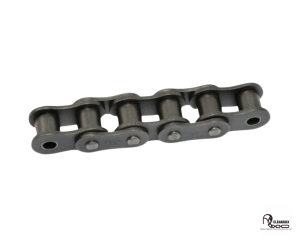
Industrial chains are used across nearly every major industry due to their strength and reliability. Their applications go far beyond simple power transmission.
They are commonly used in machinery drives, lifting systems, conveyor systems, agricultural machines, construction equipment, and automated production lines.
In mining and cement plants, heavy-duty chains handle bulk materials. In agriculture, they drive harvesting equipment. In food production, stainless steel chains ensure hygienic processing. Because industrial chains support continuous operations, proper selection and maintenance significantly reduce downtime and operational costs.
Industrial chains are fundamental components of efficient and continuous industrial production.
How to Select the Right Industrial Chain?
Choosing the correct industrial chain requires understanding your specific operational requirements. Improper selection can lead to premature wear and equipment failure.
When selecting from different types of industrial chains, consider load capacity, operating speed, environmental conditions, temperature, lubrication needs, and maintenance intervals.
It is important to consult manufacturer specifications to ensure compatibility with sprockets and machinery designs. Overloading a chain reduces its lifespan and increases safety risks. Working with experienced suppliers can help you determine the correct chain size and material for your application. Proper installation and regular inspection further extend service life.
Summary
Selecting the right industrial chain improves safety, efficiency, and long-term equipment performance.